Have you ever had an unexpected sensory experience which immediately transported you back several decades? This happened to me last summer while I was exploring ‘The Compartment of Dreams’ exhibition at the Danish Railway Museum in Odense.
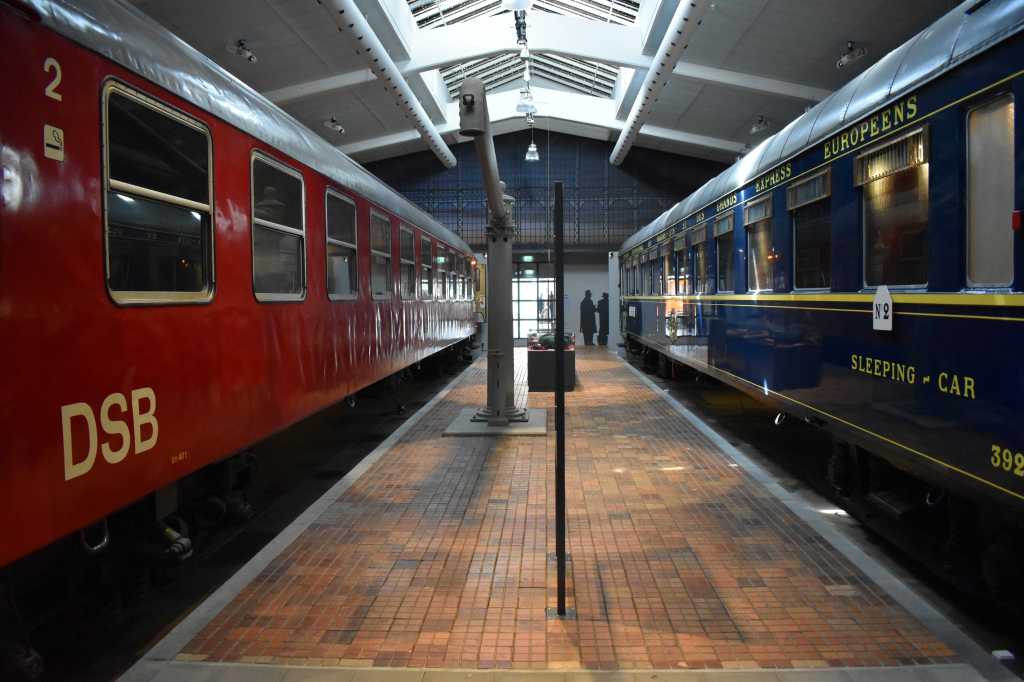
Housed in a former engine shed, the exhibition revolves around two imposing but contrasting railway carriages. One is a standard class coach which carried thousands of young Danish backpackers at the start of their Interrail trips in the 1970s and 1980s. Alongside is a luxury Wagons-Lits sleeping car which accommodated a smaller number of passengers with much higher expectations of comfort and service. As a three-time Interrailer in the 1980s, I was especially keen to investigate the backpackers’ carriage and relive my youthful travels.
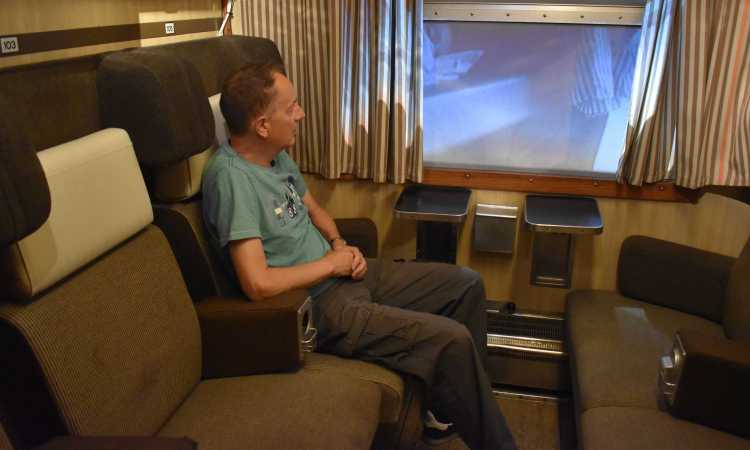
Running the length of the standard carriage is a narrow corridor with ten compartments off it, all bedecked in various shades of brown and configured with two sets of three seats facing each other. I entered one of the compartments and, unlike on my Interrail trips, had the rather confined space to myself. As soon as I sat down, I was hit by a familiar musty aroma which took me straight back to those journeys almost 40 years ago. I still can’t decide whether the smell was genuine or had been cleverly recreated. Perhaps neither and my distant memories were playing tricks on my senses.
You can find out more about my visit to the Danish Railway Museum’s Interrail and Wagons-Lits exhibition in an article published on the Mainly Museums website.
I have been working in partnership with the Museum of Youth Culture on plans for an exhibition which will focus on the British experience of Interrailing and its place in late 20th century youth culture. My visit to Denmark prompted some fresh ideas and made me even more determined to make the exhibition happen.
If you were an Interrailer in the 1970s, 1980s or 1990s and have stories to share, or photos, tickets, guidebooks and any other items associated with your trips that you would consider loaning, please contact me.
Shortly after returning from Denmark, I had the privilege of giving a public talk at The London Archives entitled ‘Europe by train: The experiences of UK Interrailers, 1972-1997’. During the evening I drew upon the more than 50 interviews I conducted with Interrailers across Britain and Northern Ireland between May 2023 and March 2024. I was delighted that almost half of these participants, plus many others, were able to attend in person or via the live stream. After the talk I overheard a few Interrail stories being swapped by members of the audience.
If you would like to watch the talk, a recording of the live stream is available on The London Archives YouTube channel.
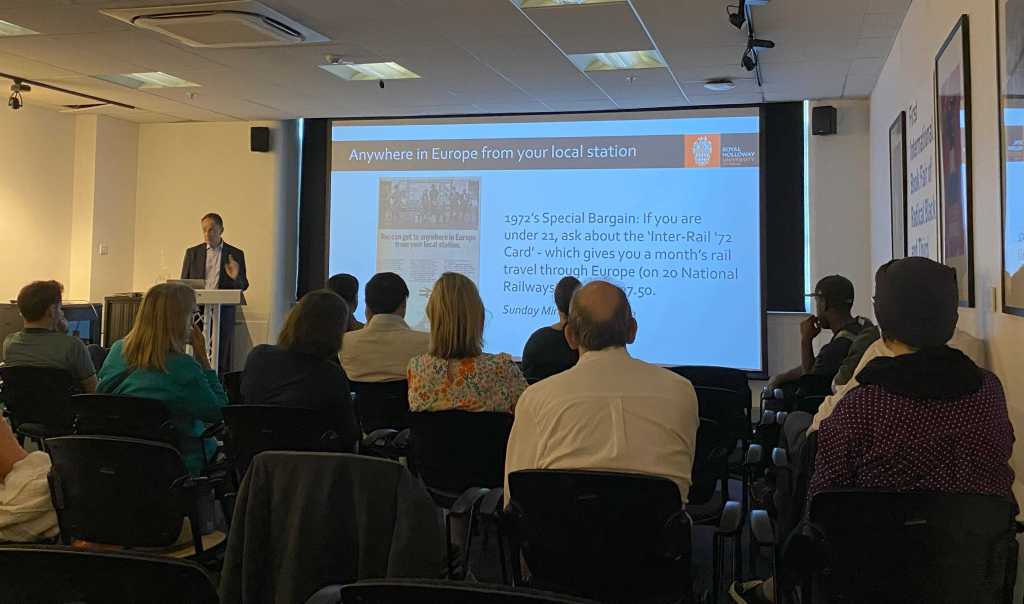
In the talk I outlined why the Interrail scheme was introduced in 1972 and how it grew in popularity at roughly the same time as another more organised form of tourism, package holidays. I also highlighted how the roots of young adults exploring continental Europe can be traced back several centuries to the ‘Grand Tour’. These extended journeys involved heading south, often to Paris and then through France towards what is now unified Italy. In their respective interviews, both Emma and Katherine suggested that Interrailing was the 20th century equivalent of the Grand Tour.
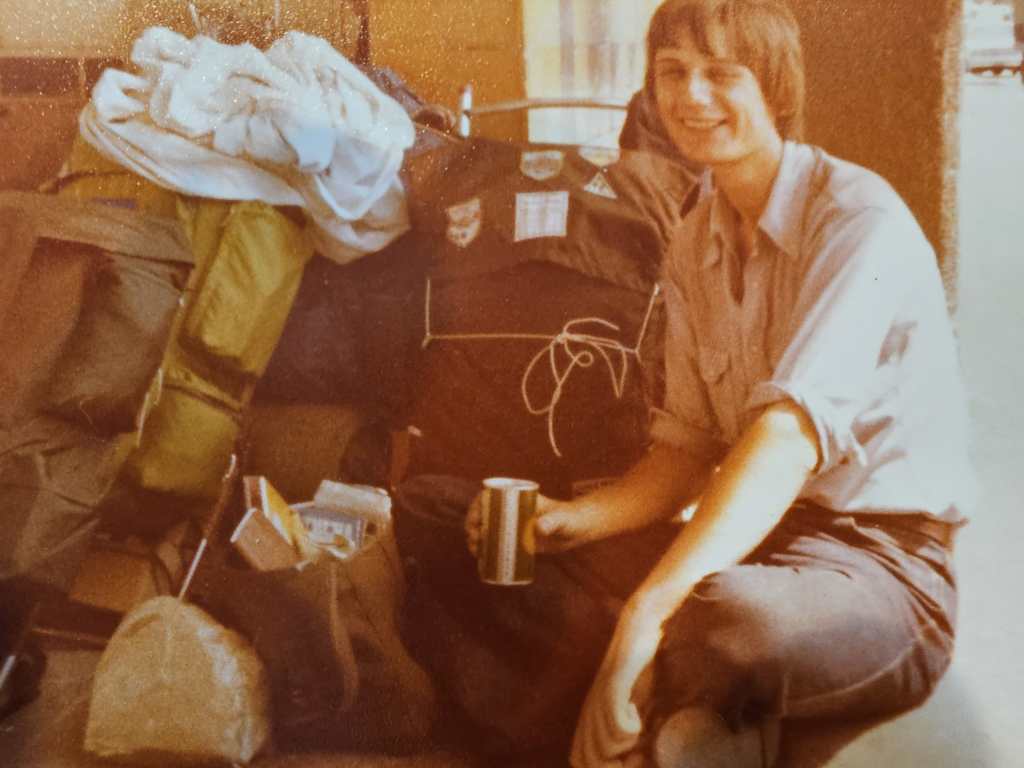
For many Interrailers, their trip was a rite of passage into adulthood, a coming-of-age process that is not always available to young people in Western society. As an example, in 1978 Nick answered an advert in a newspaper from someone who was looking for a travel companion and they set off together. Nick soon realised that, for him, the arrangement wasn’t working and by the time they reached Greece he decided to strike out on his own. In summarising what his Interrail trip provided, Nick said,
I suppose a sense of freedom and adventure. Finding myself a bit more as a human being, connecting with people from different cultures and countries, maybe helped me work out what I was gonna do with my life. I still didn’t sort that out for a few years, but it was part of the journey for me.
A quirk of the Interrail story is that sales grew steadily in the 1970s and 1980s when Europe was divided by what was known as the Iron Curtain. Yet, at the point where the former Eastern Bloc was opening up to foreign tourism in the early 1990s, the scheme went into a period of temporary decline. From a high point of almost 372,000 youth passes sold in 1990, just three years later sales had fallen to just under 132,000 and remained at similar levels for the rest of the decade. Nevertheless, the scheme has bounced back strongly in the 21st century and is currently enjoying a renaissance.
In 2023, over 797,000 Interrail passes were issued to European residents, with Germany being the leading market followed by the United Kingdom. Although the majority of passes were used by young travellers, what has become apparent is that the days when Interrail was the preserve of youth are now long gone as 38 per cent of passes were purchased by adults and seniors. This suggests that things might be going full circle and travellers whose senses were captivated by Interrail in its early years are once again taking to the rails.
Further reading
Ian Lacey, ‘Interrail: The Trans Europe Express’, History Today, August 2024, pp. 86-89. This article is behind a subscriber paywall so please contact me if you are unable to access the full text.
Acknowledgements
Thanks to Anna Back Larsen at the Danish Railway Museum, Lisa Der Weduwe at the Museum of Youth Culture, Symeon Ververidis at The London Archives, John McKerracher at Mainly Museums and Rhys Griffiths at History Today for their support of my public history activities mentioned above.
Additional thanks to Dr Edward Madigan and Dr Amy Tooth Murphy, my co-supervisors at Royal Holloway, University of London, for their ongoing enthusiasm and valued contributions to my postgraduate research project.
 The Long Path