During my recent UK tour, which was somewhat overshadowed by a certain Oasis reunion, I presented some of the findings from my Interrail research project to conference audiences in Glasgow and Dudley.
As is the case at nearly every event I go to these days, I had the pleasure of encountering more late-twentieth century Interrailers. I love meeting people who took a trip at some point between 1972 and 1997 as, alongside my PhD studies, I am working on ideas for an Interrail exhibition. Since my return from Scotland and the West Midlands I have been reflecting on the two conferences.
Delivering talks is an effective way of raising the profile of my postgraduate research project, but the application process requires thinking ahead. For each conference I had to submit a 250-word summary of my presentation, approximately five months in advance. These were scrutinised by experienced historians who could have vetoed my submissions. Fortunately, they approved both!
With strict time slots of no more than twenty minutes, I had to communicate my research in a concise and user-friendly way to audiences who might not know about the Interrail scheme. Then once the talks were delivered, I was again subject to the scrutiny of my peers, only this time they were in the same room and could ask me questions. I have met speakers at conferences who dread Q&A sessions, but I always look forward to them. In my experience, questions from the floor often prompt new ways of thinking about my project.
Talking about memory aids
My two talks were on different themes, both of which I will be exploring more fully in my thesis. At the Oral History Society conference, which took place at the University of Strathclyde, I discussed the use of memory aids in oral history interviews. Because I had invited Interrailers to talk about journeys they had undertaken between three and six decades previously, I gave them the option of bringing memory aids to their interviews.
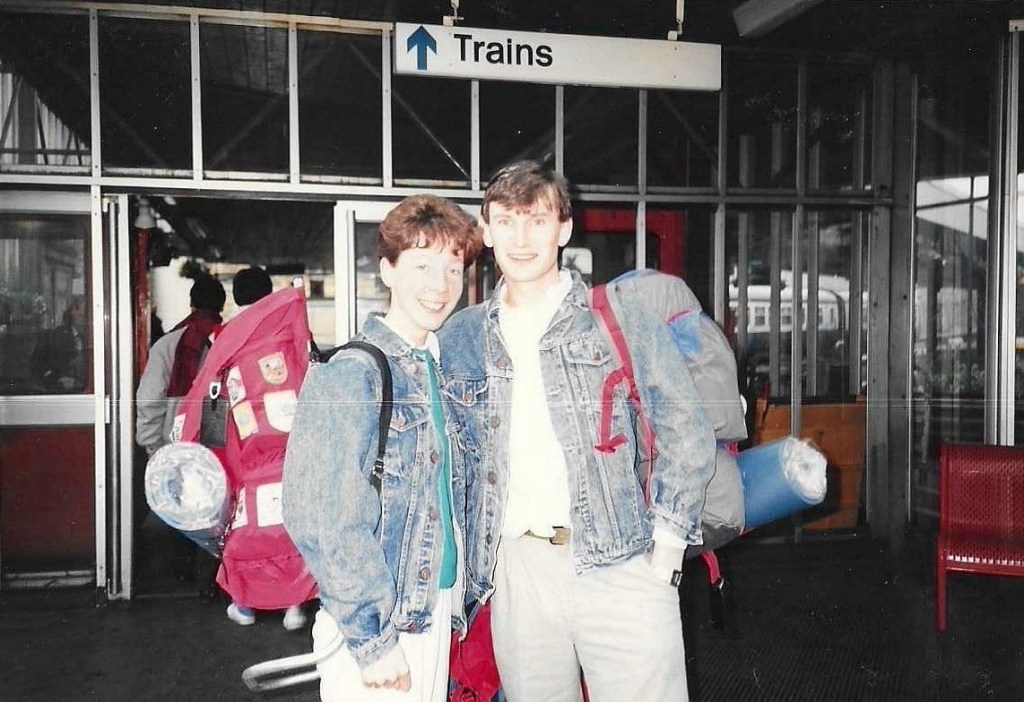
Some arrived armed with scrapbooks, Interrail passes, timetables, journals or photo albums. Such items form an important part of the historical record and are particularly useful for small details like dates and prices which are often lost to memory. In the talk, I drew upon my interviews with Olwen and Richard who had referred to photos and a large map of Europe when sharing stories of their Interrail sprint through ten countries including Morocco, Italy, Greece, Yugoslavia and Hungary in 1988.
Other Interrailers brought no items to their interview, either because they chose not to, or because they didn’t have any. Some had refreshed their memories by speaking with their travel companions which, in a handful of cases, involved re-connecting after being out of touch for a long period. This process of jogging memories highlighted how oral history narratives will always evolve and are never likely to be expressed in the same way twice. Memories are subject to external influences such as the perspectives of fellow travellers.
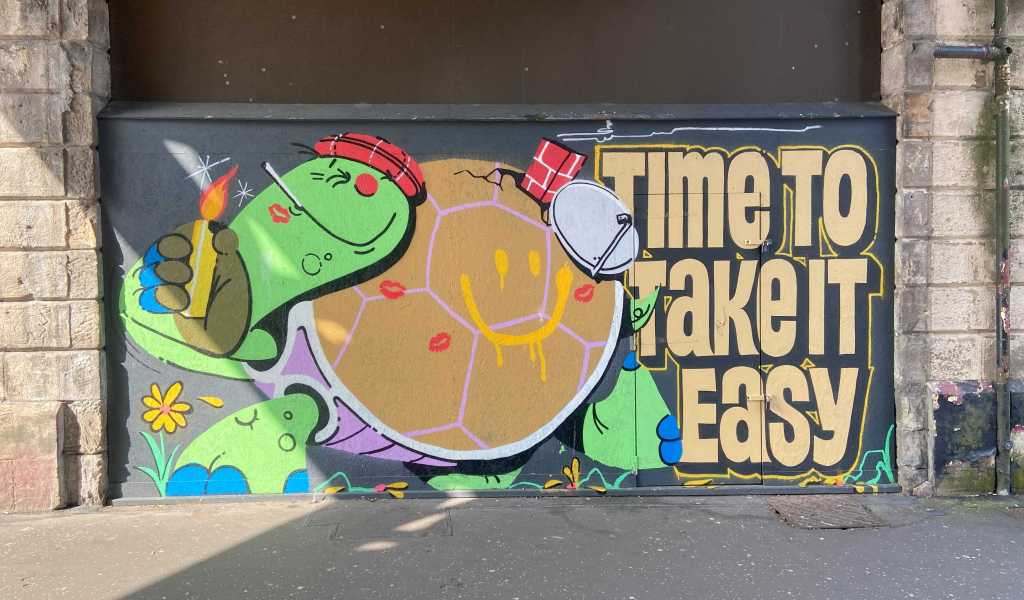
In the limited amount of free time I had in the city, I took a walking tour and enjoyed the abundance of street art and surprisingly sunny weather. Before the conference dinner the Lord Provost and Glasgow City Council hosted a reception in the City Chambers on George Square. Here over a hundred oral historians gathered for an hour or so in the impressive Victorian surroundings.
Discussing social mobility
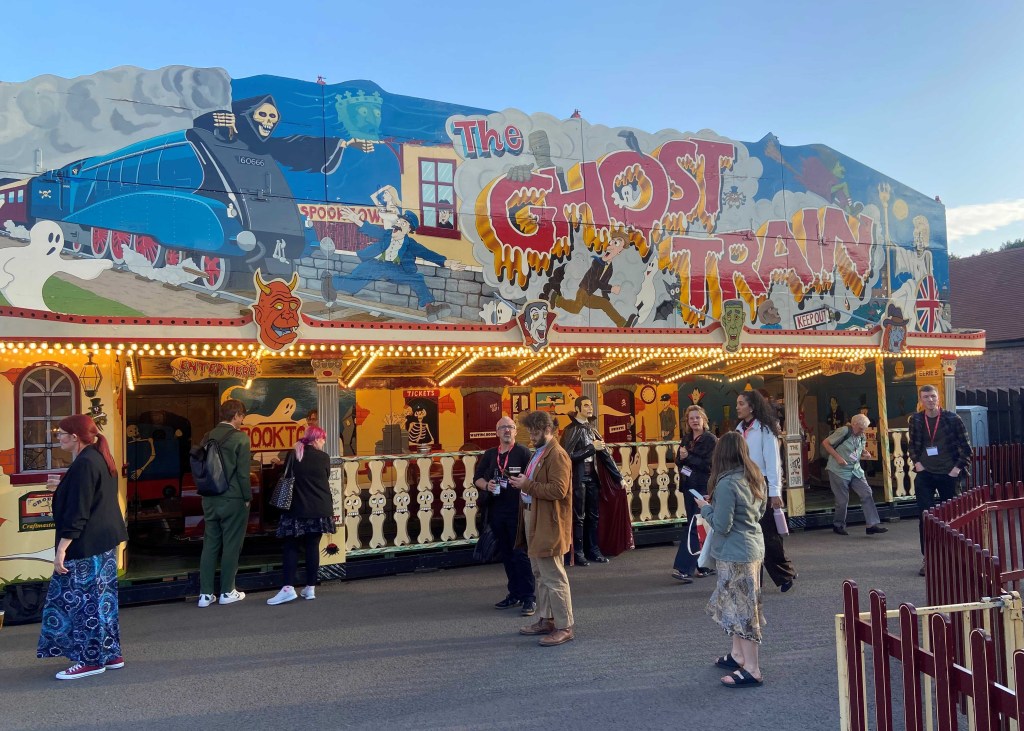
The Black Country Living Museum in Dudley has been on my bucket list for ages and proved to be an excellent venue for the Social History Society conference. On the first evening we were fortunate to have this open-air museum to ourselves. I was a little disconcerted to discover that the historic Post Office had been recreated in the style of my year of birth. I took a vintage ghost train ride and later met one of the costumed interpreters who was a shady wartime character known as ‘The Spiv’.
For an audience of social historians, I decided to speak about youth travel as an agent of social mobility. In the talk I drew upon those parts of the interviews where Interrailers talked about their adolescence, early travels, and family circumstances. Based on their parents’ occupations, rather than self-identification, at least a third of those I interviewed came from working-class backgrounds. Although only a few specifically mentioned their working-class credentials, more spoke about the financial constraints they experienced growing up.
Until now, no one has carried out in-depth historical research on the British experience of Interrail. During my talk, I proposed that this void had been filled by a small number of journalistic retrospectives, and these had created the misleading impression that Interrail was almost exclusively undertaken by middle-class university students. Having conducted face-to-face interviews with fifty-three participants from all over the UK, I believe that their stories challenge this assumption about Interrailers as a cohort.
Nearly all of the people I interviewed did go to university within a year or two of leaving school, and most were the first generation in their family to do so. Yet for many, Interrail trips were not taken during college years. Some went while still at school, two aged sixteen, others after graduating when in full-time employment. A significant number of those who took an Interrail trip while at university had to travel at the end of the summer break after working for several months to raise the necessary funds.
Wider learning
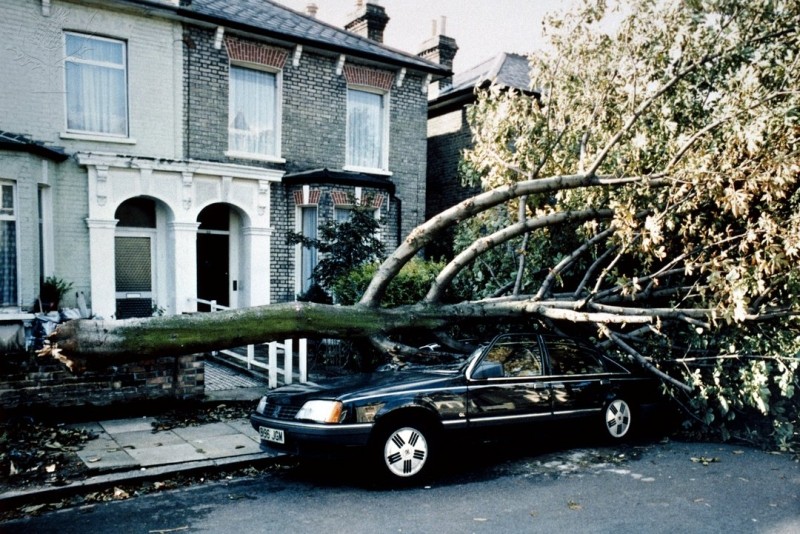
Conducting postgraduate research is a long and often solitary process. As such, conferences provide a welcome opportunity to meet researchers who, like me, are in the later stages of their projects, and also those who have achieved their doctorates. In addition, conference talks help broaden my historical knowledge. Across the two events I attended more than forty presentations on subjects as diverse as anti-German sentiment in post-war Britain, the Great Storm of 1987, how accents can denote belonging, and tourism at sites associated with death.
Hearing about different historical research projects informs my own thesis which is currently in the draft stage. I am expected to submit this for examination by September 2026. My project entitled ‘Anywhere in Europe from your local station: An oral history of the late-twentieth-century Interrail experience from a UK perspective’ is supervised by Dr Amy Tooth Murphy and Dr Edward Madigan at Royal Holloway, University of London.
Further listening
Earlier this year, I was delighted to be the guest on ‘The Other Kind of Doctor’ podcast. During the episode, I shared some tips about how to network effectively at conferences and other events. Please have a listen and feel free to share any networking strategies that work for you.


Excellent piece Ian, I’m sure all your audiences here and in Glasgow and Dudley enjoyed as much as I did. Keep up the very good work. I look forward to hearing more soon.
LikeLiked by 1 person